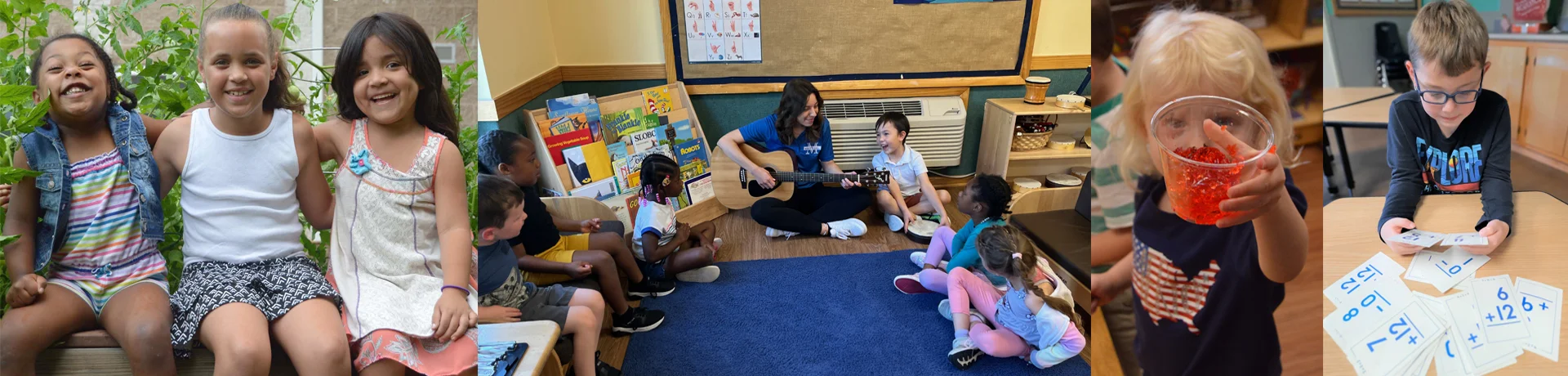
STREAMin³ Curriculum Model
The Merit School of Virginia uses the STREAMin³ curriculum, © 2018 by the Rector and Visitors of the University of Virginia. All rights reserved.
Research has shown that teacher-child interactions are among the strongest predictors of children being ready for kindergarten. The Merit School of Virginia implemented the STREAMin³ Curriculum Model for Infant, Preschool, and Kindergarten Programs in the Fall of 2022. It was developed by a team from The University of Virginia Center for Advanced Study of Teaching and Learning (CASTL).
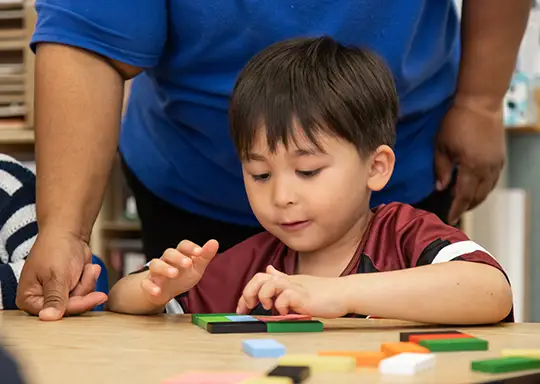
This innovative curriculum is designed to spark a child’s level of learning, inspiring young children to be curious and motivated learners. The Merit School aims for each STREAMin³ classroom to be a unique and imaginative place where children engage their interests and experiences, ask questions, and solve problems to build lifelong learning skills. We are proud to partner with The University of Virginia and the Virginia Department of Education in this effort.
UVA has been instrumental in helping us implement the program from the very beginning and launch the curriculum in our schools. Their trainers came to our locations to onboard teachers and provide them with a deeper understanding of intentional teaching practices. UVA has continued this support through in-person training and online platforms to ensure a thorough understanding of the curriculum.
“The adoption of STREAMin³ has allowed us to streamline our efforts across classrooms and locations. The combination of S.T.R.E.A.M. and Core Skills offers our educators an unprecedented level of engagement, promoting student success in all aspects of life.”
– Dr. Steve Legacy, Vice President of Education
How STREAMin³ Curriculum Benefits Your Child: Two Components
STREAM Skills
The STREAM component is the content we teach:

SCIENCE

TECHNOLOGY

READING

ENGINEERING

ART

MATH
Core Skills
The Core component contains five core skills:

RELATE with peers and adults

REGULATE their emotions, attention, and behavior

THINK deeply about the world around them

COMMUNICATE with others productively

MOVE their bodies to achieve goals
These core skills help children build relationships, regulate emotions and behavior, think deeply about the world, communicate ideas, and physically interact with their environment.
The STREAMin³ Curriculum Model in Application
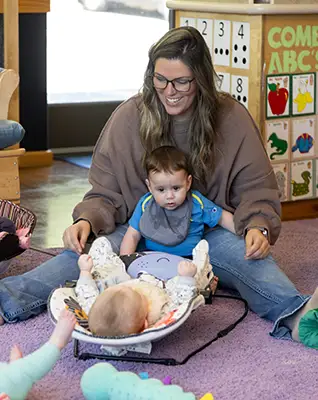
Communicate – Example with Infants
The STREAMin³ curriculum model recognizes the importance of providing a language-rich environment. This concept is illustrated by communicating to the child through self-talk throughout the day about their experiences. One of our teachers explains how she models self-talk in the Baby Steps program as follows:
“I show the baby the bottle, and using the baby’s name, I tell the child what I am doing.” She does the same conversation with music. “I tell the child, now we will listen to the music and clap our hands. The benefit to the child is that they hear spoken language throughout the day that corresponds to these activities.”
Integrating Academics, Social-Emotional Learning, and Intentional Interactions
STREAMin³ naturally integrates a focus on academics with social-emotional learning and brings intentionality to moment-to-moment interactions. Intentional interactions are woven into the STREAMin³ curriculum model to engage young learners at each level. This is done by the teacher playing alongside the children and asking open-ended questions that encourage them to think, explore, and collaborate with each other.
Intentional Interactions – Example with Toddlers
Another teacher explains how she adopts this practice with the toddlers in her classroom. “For example, today we did ‘painting in a bag.’ As we began, we would do the activity while sharing, taking turns, and enjoying the moments together. This method works well because you’re not just doing things; you’re explaining as you go and being very intentional in communicating with the child.”
Intentional Interactions – Example with Junior Kindergarten Class
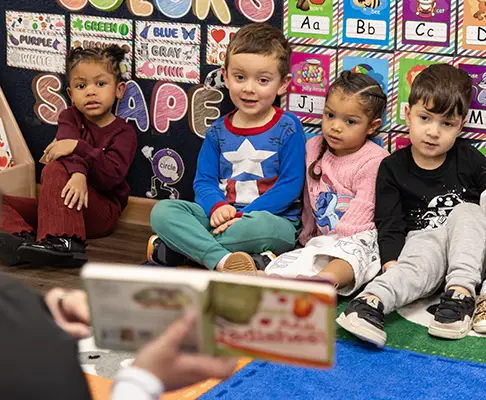
One of our Junior Kindergarten teachers shares how she demonstrates intentional interactions in class. “Children at this age are very active, so I incorporate music and movement to keep them busy and entertained. Reading time doesn’t just limit itself to reading a book, but also includes focusing on dialect, diction, phonics, and American Sign Language. This helps students be prepared for the next step in their schooling.”
She continued, “For example, a student in my class will attend kindergarten next year. He was struggling with writing his name and using expressive language appropriately. Now, his speech has improved dramatically, and he is more confident and ready for kindergarten.”
“The STREAMin³ model provides more freedom to do concentrated activities with the children. It does not just have to come directly from the curriculum books. For instance, if we are working with water, I may incorporate planting seeds and add an engineering lesson by building little boats out of felt and toothpicks. “I speak many words in Spanish as we go about our activities throughout the day. Even students unfamiliar with the language learn new words and phrases in Spanish daily.”
Observations and Assessments
VKRP Virginia Kindergarten Readiness Program

The Merit School will implement the Virginia Kindergarten Readiness Program (VKRP) to assess students’ social-emotional, math, literacy, and language skills. These student assessments will assess all STREAMin³ Curriculum Model domains.
Woven into STREAMin³ are supports and activities that directly align with the VKRP assessment.
CLASS™
In addition to the Virginia Kindergarten Readiness Program, LLE Education Group has, for several years, measured the quality of our education through the CLASS™ Assessment Scoring System. This observational tool assesses the quality of teacher-child interactions in infant, toddler, and preschool classrooms. It was developed by researchers at the University of Virginia School of Education and Human Development.
CLASS™ measures three domains of teacher-child interactions which include:
- Emotional Support: How teachers create a warm, supportive, and responsive learning environment.
- Classroom Organization: How teachers manage their classrooms effectively and provide clear expectations for behavior.
- Instructional Support: The extent to which teachers provide high-quality instruction tailored to all children’s needs.
CLASS™ scores are rated on a 7-point scale, with higher scores indicating higher quality interactions. Research has shown that children in classrooms with higher CLASS™ scores have better social-emotional, cognitive, and academic outcomes.